How Uneven Water Distribution Affects Cooling Tower Fill Performance
Cooling tower fill is designed to increase the contact area between water and air, helping heat transfer take place more efficiently. However, even well-designed fill cannot perform properly when water is distributed unevenly across the fill pack. Some areas may receive too much water, while others remain underused. The result can be reduced cooling performance, uneven operating conditions, and unnecessary maintenance costs.
Understanding the relationship between water distribution and cooling tower fill performance helps maintenance teams identify problems before replacing components that may still be in good condition.
1. What Causes Uneven Water Distribution in a Cooling Tower?
Uneven water distribution can occur in both crossflow and counterflow cooling towers. The cause is not always the fill itself. In many cases, the problem begins in the water distribution system above or around the fill pack.
Blocked or Damaged Distribution Nozzles
Scale, dirt, biological growth, and debris can restrict water flow through distribution nozzles. Damaged nozzles may also produce an irregular spray pattern, leaving some sections of the fill with insufficient water.
Uneven Flow from the Distribution System
Partially blocked pipes, incorrectly adjusted valves, or differences in water pressure can cause uneven flow across the tower. A distribution system that worked correctly when new may become unbalanced as deposits accumulate or components wear.
Incorrect Installation or Fill Arrangement
Fill packs that are incorrectly positioned, poorly supported, or installed with unsuitable spacing can affect water flow through the tower. Gaps between fill sections may also allow water to bypass the intended heat-transfer surfaces.
Scale and Deposits on the Fill Surface
Mineral deposits and biological growth can change the way water spreads across the fill. Deposits may obstruct passages, redirect water, and reduce the effective contact area between water and air.
2. How Uneven Water Distribution Affects Cooling Performance
Reduced Effective Heat-Transfer Area
Cooling tower fill works by spreading water into thin films over a large surface area. When water reaches only part of the fill, the remaining surface contributes less to heat transfer. The tower may therefore deliver less cooling capacity than expected, even when the fill is not severely damaged.
Water Bypass and Poor Contact with Air
Water can follow preferred paths through the fill instead of spreading evenly. Some water may move through channels or gaps with limited contact with air, reducing the effectiveness of the cooling process.
Higher Operating Costs
If the tower cannot achieve the required leaving-water temperature, operators may need to run fans or pumps for longer, increase equipment output, or reduce process loads. The actual energy impact depends on the tower design, control strategy, and operating conditions.
Uneven Fouling and Maintenance Requirements
Areas receiving excessive water or collecting suspended solids may foul more quickly, while poorly wetted areas may not use the fill surface effectively. This uneven condition can make cleaning and maintenance more difficult.
3. How to Check Water Distribution and Fill Condition
Before deciding that cooling tower fill needs replacement, inspect the water distribution system and the fill together. This helps distinguish a distribution problem from damage or deterioration of the fill itself.
- Inspect the nozzles: Look for blocked openings, damaged components, and inconsistent spray patterns.
- Check the distribution pipes: Look for deposits, leaks, damaged connections, and valves that may restrict flow.
- Observe water coverage: Where safe and practical, check whether water reaches the intended fill area evenly during normal operation.
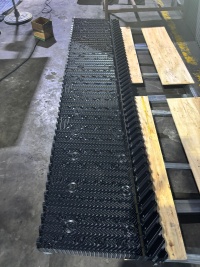
- Inspect the fill pack: Look for blocked passages, deformation, broken sheets, excessive deposits, and gaps between sections.
- Compare operating data: Review inlet and outlet water temperatures, water flow, ambient wet-bulb temperature, and fan operation under comparable conditions.
Temperature readings should be interpreted alongside the tower's design conditions and current load. A high outlet-water temperature alone does not prove that the fill is defective; insufficient water flow, poor air movement, and unfavorable weather conditions can also affect performance.
4. Practical Ways to Improve Water Distribution
Clean and Maintain the Distribution System
Remove deposits and debris from nozzles and distribution pipes using cleaning methods suitable for the equipment and water chemistry. Replace damaged components and confirm that the system delivers the required flow and coverage.
Review Water Flow and Operating Conditions
Check whether the actual water flow is within the tower's intended operating range. Adjustments should follow the equipment manufacturer's recommendations, since excessive flow or pressure can create other operating problems.
Clean the Fill When It Is Still Serviceable
If deposits are restricting water passages but the fill sheets remain structurally sound, appropriate cleaning may restore some of the lost performance. The cleaning method should be selected according to the fill material, deposit type, and condition of the pack. Avoid excessive pressure or aggressive chemicals that could damage the sheets.
Replace Fill That Is Damaged or Beyond Effective Cleaning
Cleaning may not be sufficient when fill sheets are badly deformed, brittle, broken, or persistently blocked. In these cases, replacement may provide a more reliable long-term solution.
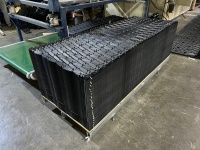
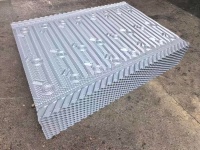
When selecting replacement material, consider the tower's original design, water quality, operating temperature, required cooling performance, and compatibility with the existing support structure. PVC film fill is commonly used in suitable cooling tower applications, while PP fill may be preferred where its material properties better match the operating conditions.
Explore our Film Cooling Tower Fill and Counter Flow Cooling Tower Fill for different tower configurations and replacement requirements.
5. Why Fill Selection and Installation Matter
Correct fill selection is only part of the solution. The replacement pack must also fit the tower geometry and work with the existing water distribution and airflow arrangements.
Before ordering replacement fill, confirm the following details:
- Cooling tower type: crossflow or counterflow.
- Existing fill dimensions and sheet configuration.
- Sheet spacing, thickness, and material requirements.
- Operating water temperature and water quality.
- Required quantity and installation arrangement.
For replacement projects, matching the existing configuration can help simplify installation. However, any proposed change in fill design should be checked against the tower's operating requirements rather than based on dimensions alone.
Conclusion
Uneven water distribution can reduce the effective performance of cooling tower fill, but replacing the fill is not always the first step. Blocked nozzles, restricted pipes, incorrect flow, and installation problems should be checked before making a replacement decision.
When the fill is damaged, badly fouled, or no longer suitable for the required operating conditions, selecting a compatible replacement can help restore reliable cooling performance. A systematic inspection of both the distribution system and the fill pack is the most practical way to determine the right solution.
Need replacement fill for your cooling tower? Fengbei Plastic Factory supplies PVC and PP cooling tower fill for maintenance, refurbishment, and OEM projects. With more than 500 sets of molds and flexible manufacturing options, we can support a range of fill specifications.
Explore Cooling Tower Replacement Fill or Get a Cooling Tower Fill Quote.